New Insights from the Workers’ Voice Project
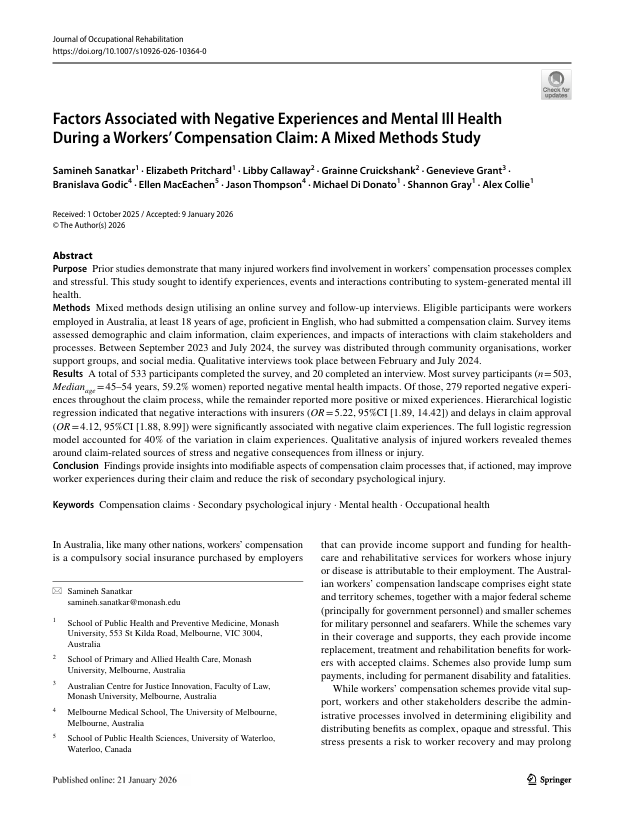
A recent publication, Factors Associated with Negative Experiences and Mental Ill Health During a Workers’ Compensation Claim: A Mixed Methods Study was recently published in the Journal of Occupational Rehabilitation. The latest findings from the Workers’ Voice study explored what aspects of workers’ compensation claims contribute to negative experiences and mental ill health among injured workers in Australia.
Key Findings
 Workers’ Voice study surveyed 533 workers who had submitted workers’ compensation claims in Australia in the last 10 years
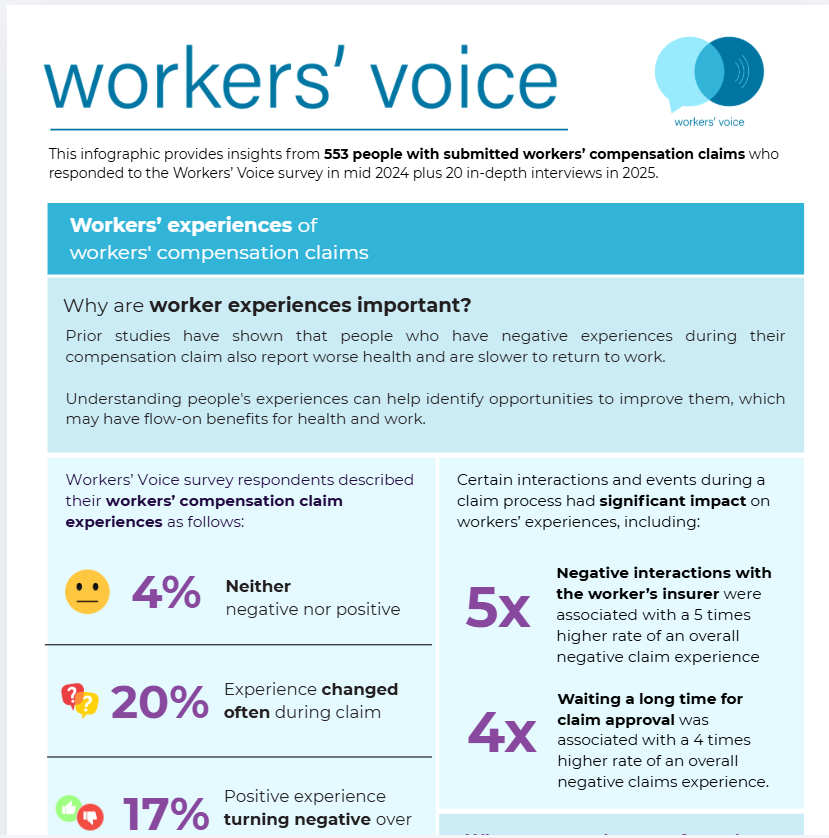
Negative interactions with insurers and delays in claim approval were strongly linked to workers reporting consistently negative experiences.
Qualitative feedback highlighted key stressors, including poor communication from claim managers, difficulty navigating claim requirements, long wait times for approvals, and a sense of being disadvantaged, especially at a time of illness or injury.
The emotional toll extended to workers’ personal lives. Many workers described loss of confidence, financial strain, and impacts on family life.
What This Means
This research shows the importance of improving workers’ compensation systems, so they support, not hinder, recovery and mental wellbeing of all workers who submit a claim. Enhancing clarity, reducing delays, and fostering empathetic communication could help mitigate stress experienced by injured workers.
Centering lived experience is a core principle of the Workers’ Voice project. Through listening to what workers have to say, we can identify actionable solutions that make workers’ compensation systems fairer, clearer, and more supportive for those they aim to help.
🔗Read the published article here.
🔗To help make these findings more accessible, we’ve created an infographic summarising key insights from the study and the common stressors workers reported during their claim. You can download it here.